09-01-2026

Friday 9 January 2026
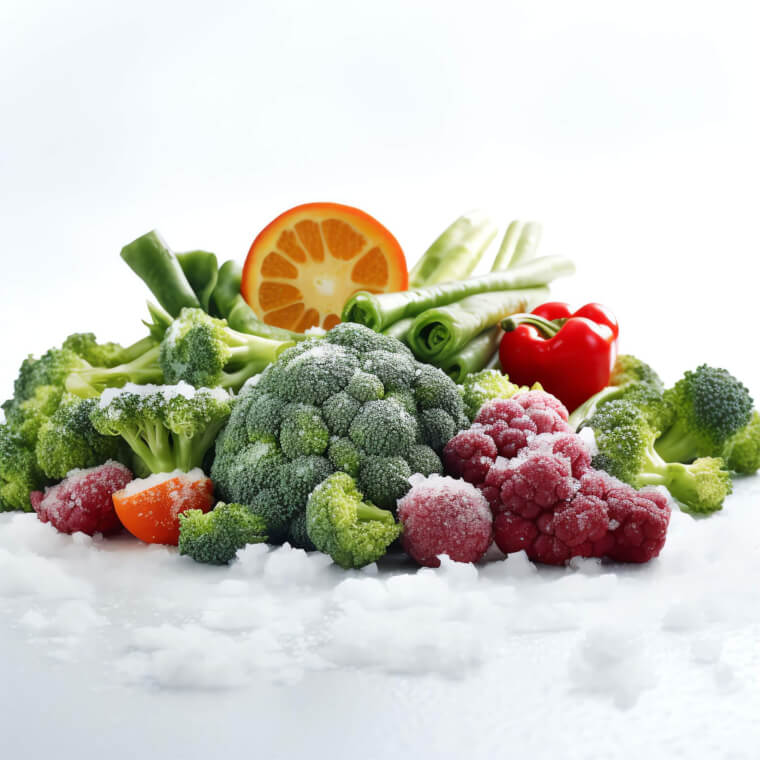
Freezing is often regarded in practice as a compromise in quality. There is a common belief that fresh food inherently contains more nutritional value than frozen alternatives. Scientific research, however, presents a more nuanced picture, especially when taking into account how food is actually stored and used in practice.
In this two-year study, the authors analyzed various types of fruits and vegetables, including broccoli, spinach, peas, strawberries, and blueberries. What makes this study unique is that, in addition to fresh and frozen products, a third category was included: fresh-stored. These were fresh products that were stored in a refrigerator for five days after purchase, in order to mimic typical consumer storage behavior.
The researchers measured levels of, among others, vitamin C, β-carotene (provitamin A), and folate, using standardized analytical methods and quality controls.
The key finding of the study is that, in most cases, no significant differences were found in vitamin content between fresh, fresh-stored, and frozen products. When differences were observed, frozen products more often performed similarly to or better than fresh-stored products.
This is an important insight, as fresh products are rarely consumed immediately after harvest or purchase in everyday practice. During transport, storage, and household refrigeration, processes such as enzymatic degradation and oxidation occur, which can affect nutritional value. Freezing, on the other hand, strongly slows these processes.
The study by Li et al. therefore supports the idea that freezing can be an effective preservation method for retaining nutrients. Not because frozen food is “better” than fresh food, but because it stabilizes quality at the moment the food is at its best and slows further degradation.
This insight aligns with broader knowledge on nutrient preservation: lowering temperature reduces enzymatic activity and oxidative processes, contributing to the retention of vitamins and other sensitive nutrients.
Although the study focuses on fruits and vegetables and not specifically on tube feeding, the underlying principles are highly applicable. In tube feeding as well, maintaining nutritional quality is essential, especially for patients who depend on enteral nutrition over the long term.
By choosing freezing as a preservation method, it is possible to:
Our decision to freeze tube feeding is therefore not a practical compromise, but a deliberate choice for quality. The available scientific evidence shows that freezing, when applied carefully, fits well within the goal of preserving nutritional value.
The study by Li et al. contributes to a more nuanced understanding of freshness, storage time, and nutritional quality, and underscores that freezing is a valid and well-supported method within nutritional care.
Bron:
Li, L., Pegg, R.B., Eitenmiller, R.R., Chun, J-Y., & Kerrihard, A.L. (2017).
Selected nutrient analyses of fresh, fresh-stored, and frozen fruits and vegetables.
Journal of Food Composition and Analysis, 59, 8–17.
https://www.researchgate.net/publication/313416712_Selected_nutrient_analyses_of_fresh_fresh-stored_and_frozen_fruits_and_vegetables